gen_575.1.gif gen_302.1.gif gen_577.1.gif
 
gen_578.1.gif
WelcomeNewsCourses and EventsPast Courses/EventsForest GardenPigsSheepBees and HoneyPoultryCharcoalRecipesAbout UsContact UsLinksFruit to JuiceChair Making 2010Sausages 2010Sleningford Preservese-mail me

Bees and Honey


IMG_2439_1.JPG

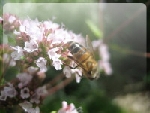
Bees are the great pollinators of plants, without them we would run out of food within a couple of years. As food is one of the things we enjoy most out of life, we want to make sure our fruit and vegetables are pollinated!


bee swarm.JPG

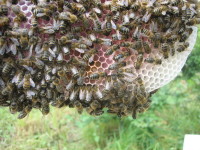
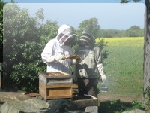
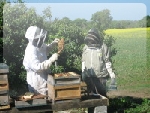
The number of hives we have varies at different times of the year. During the summer we may have up to 5 but during the winter we 'unite' the hives and have two. One of the hives in the Forest Garden is quite unusual. It was made by our friend, Anna Chambers and is an observation hive. The sides drop down and there's a perspex wall so you can see in but the bees can't get out. It's an unusual shape too - the sides slope inwards and the bees build their comb in a 'swarm' shape.


Honey.JPG

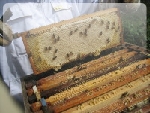
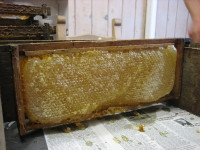
When there is sufficient honey in the hives, we spin it out of the comb and jar it up. You can't tell how much honey the bees will make each year because it greatly depends on the weather and what plants there are.

There has been a lot of press recently about the plight of bees - many beekeepers have lost colonies, due to the poor summers we've had and the build up of a mite called varroa. This mite lives on bees and if not controlled, the population becomes so great that it kills the colonies. The British Beekeeping Association is lobbying for the government to invest more money in to the research of bee health. Basically, if there are no more bees, mankind won't have food. Scary thought.P>